What to Pack for a South Dakota Pheasant Hunt: The Complete Checklist
There are two ways to pack for a South Dakota pheasant hunt. The first is to buy everything a catalog tells you to buy and haul a duffel the size of a chest freezer to the lodge. The second is to bring exactly what the country demands, in layers you can adjust, and spend your energy on hunting instead of managing gear.
This list is the second approach. It is built from what actually gets used at Coteau View Hunts across a seven-month preserve season, from ninety-degree September afternoons to March mornings that start below zero. Print it, screenshot it, or send it to your group eight weeks before the trip.
Start with the boots, because everything else is negotiable
If you get one thing right, make it footwear. You will walk between three and seven miles a day through grass, plowed ground, cattail edges, and frozen corn stubble. Bad boots do not just hurt; they change how you hunt, because a hunter with hot spots on both heels quietly starts hoping the next field is short.
What works:
- An uninsulated or lightly insulated (200g) leather upright boot for September through October. Breathability matters more than warmth in early season, and a sweaty foot in a heavy boot blisters fast.
- A 400g to 800g insulated boot for late November through March. Add a wool sock and you are set to standstill in a blocker position for twenty minutes without losing feeling in your toes.
- Rubber knee boots if you know you will be walking cattail sloughs and wet edges. Many hunters keep a pair in the truck and swap based on the field.
Break boots in for at least thirty miles of walking before the trip. Bring a second pair. Wet boots do not dry overnight, and a hunt is a miserable thing in damp leather.
Socks: merino wool, mid-weight, three pairs minimum, changed at lunch every day. Cotton socks are the most common gear mistake in the field and the easiest to fix.
Layering for a state with four seasons in one week
South Dakota weather is not subtle. A three-day hunt in November can hand you a sixty-degree afternoon and a fifteen-degree morning with a twenty-mile-an-hour northwest wind. Layering is not a preference; it is the only system that works.
Base layer. Merino or synthetic, long sleeve, fitted. Never cotton. Bring one per hunting day plus a spare.
Mid layer. A grid fleece pullover or a light synthetic vest. This is the layer you add and shed most often. Choose something that packs into the game bag of your vest.
Outer layer. A briar-resistant upland shirt or a light hunting jacket with a wind-blocking face. Full waterproof shells are usually overkill and always noisy; save them for genuinely wet days.
Cold-weather add-on. For December through March, add an insulated vest or a puffy layer that compresses small. It comes off in the first field and goes on the second you stop walking.
Pants. Briar-faced upland pants, or a good pair of work pants with a brush facing. Cattails, plum thickets, and cedar rows shred untreated fabric and leave scratches you will feel in the shower.
The practical test: at the truck you should feel slightly cold. If you are warm at the truck you will be soaked with sweat by the third field, and sweat is what makes you cold when the wind picks up.
Blaze orange, and where to actually wear it
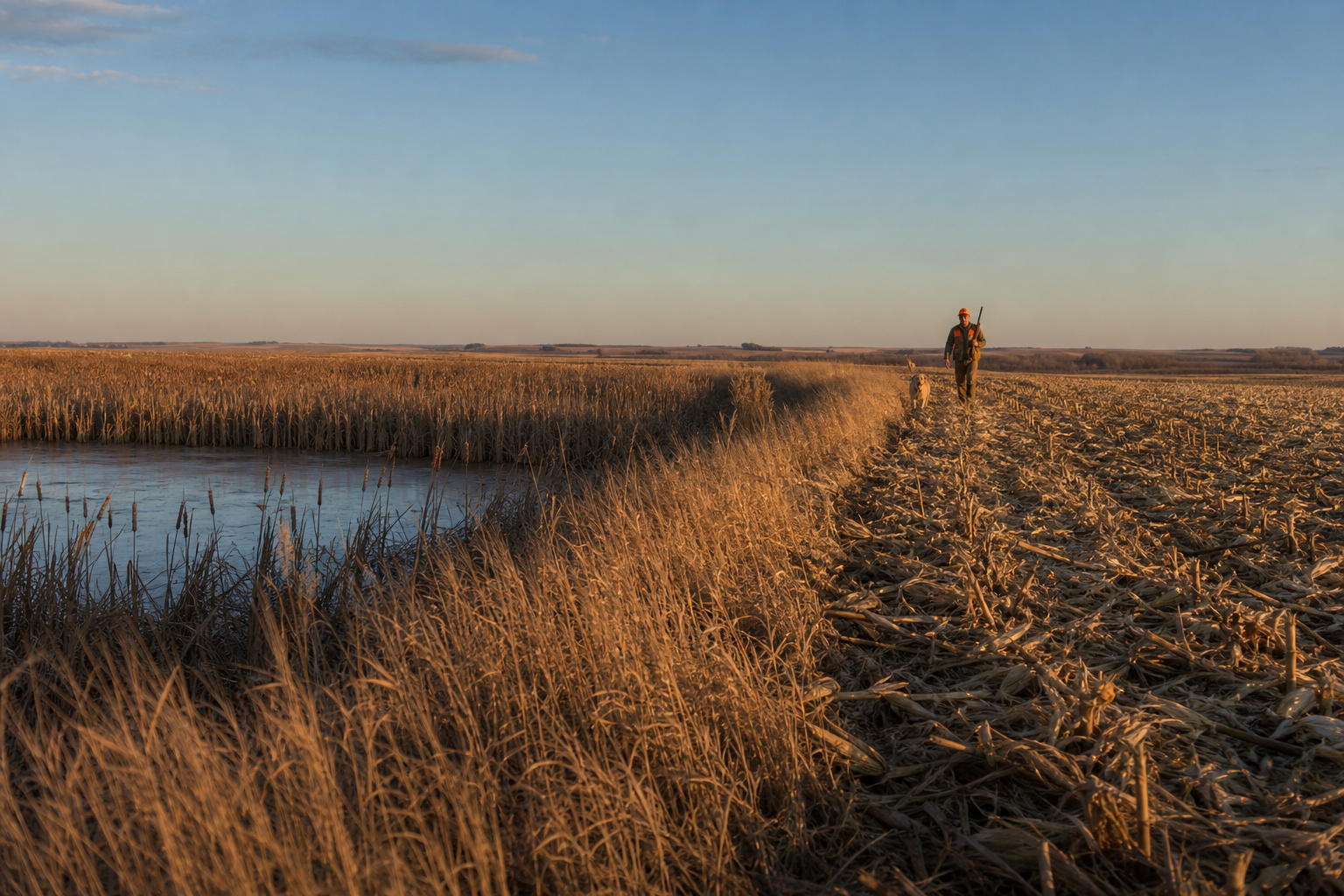
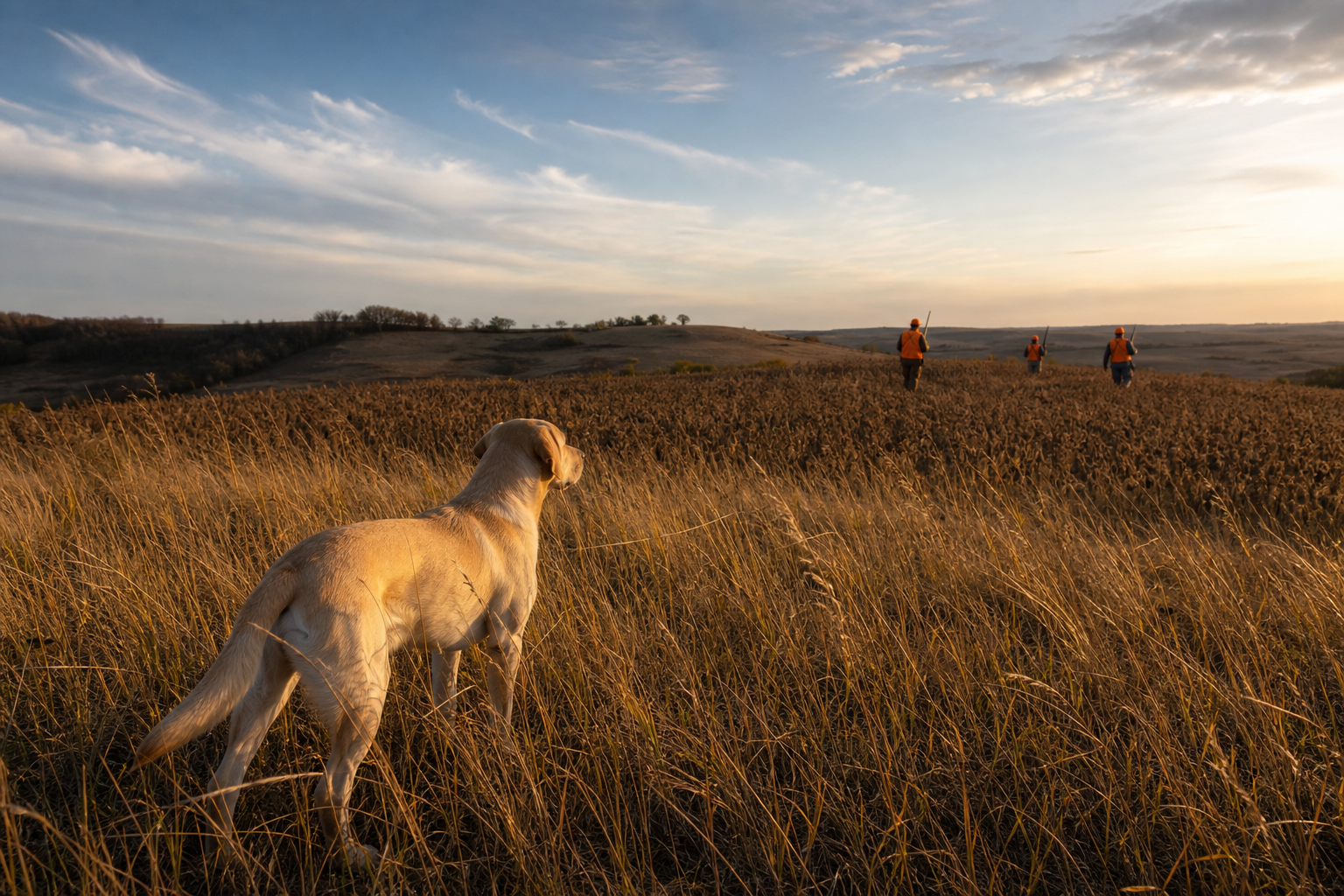
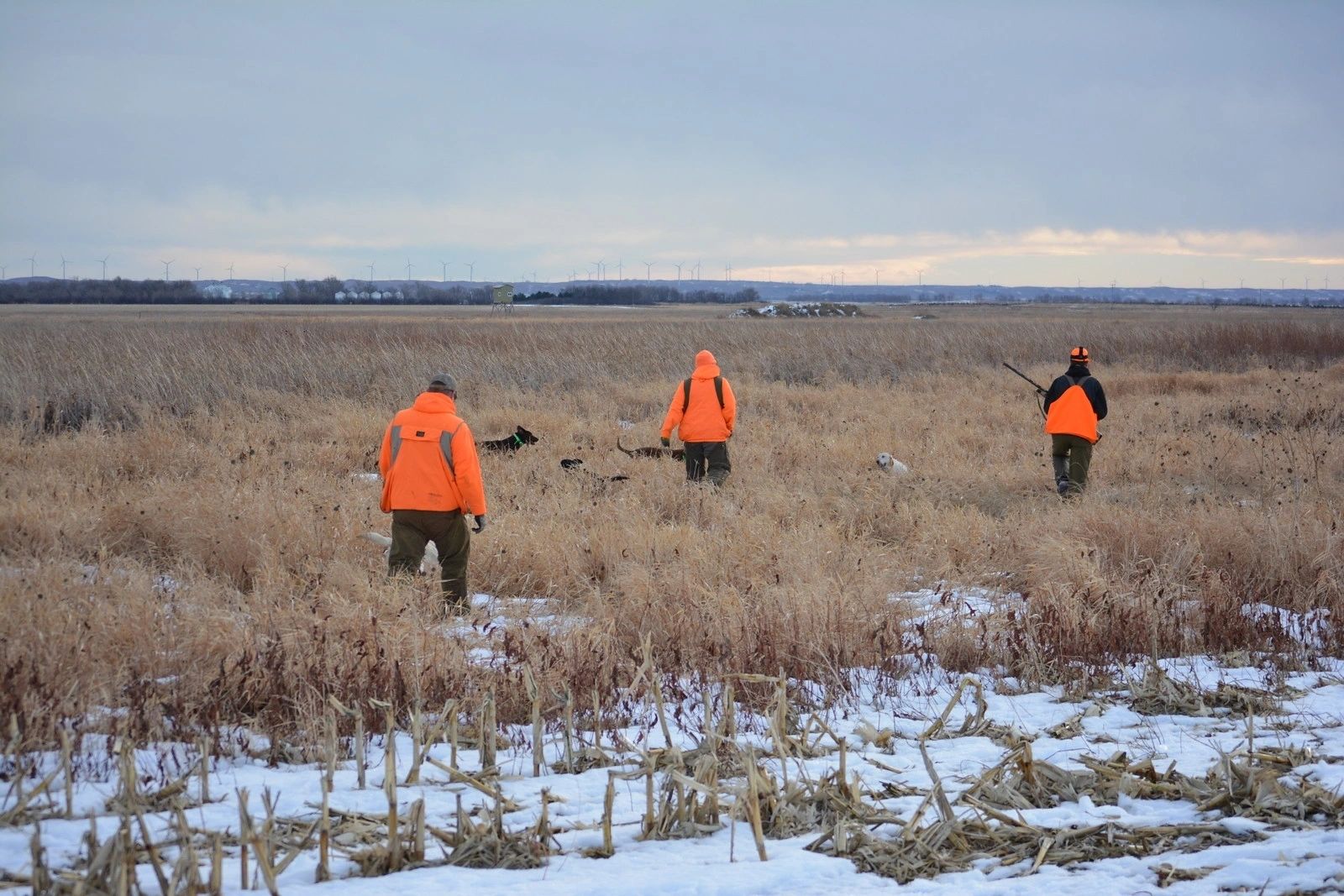
South Dakota requires a visible article of blaze orange while hunting. Beyond compliance, orange is what keeps a line of eight walkers safe when the grass is chest high.
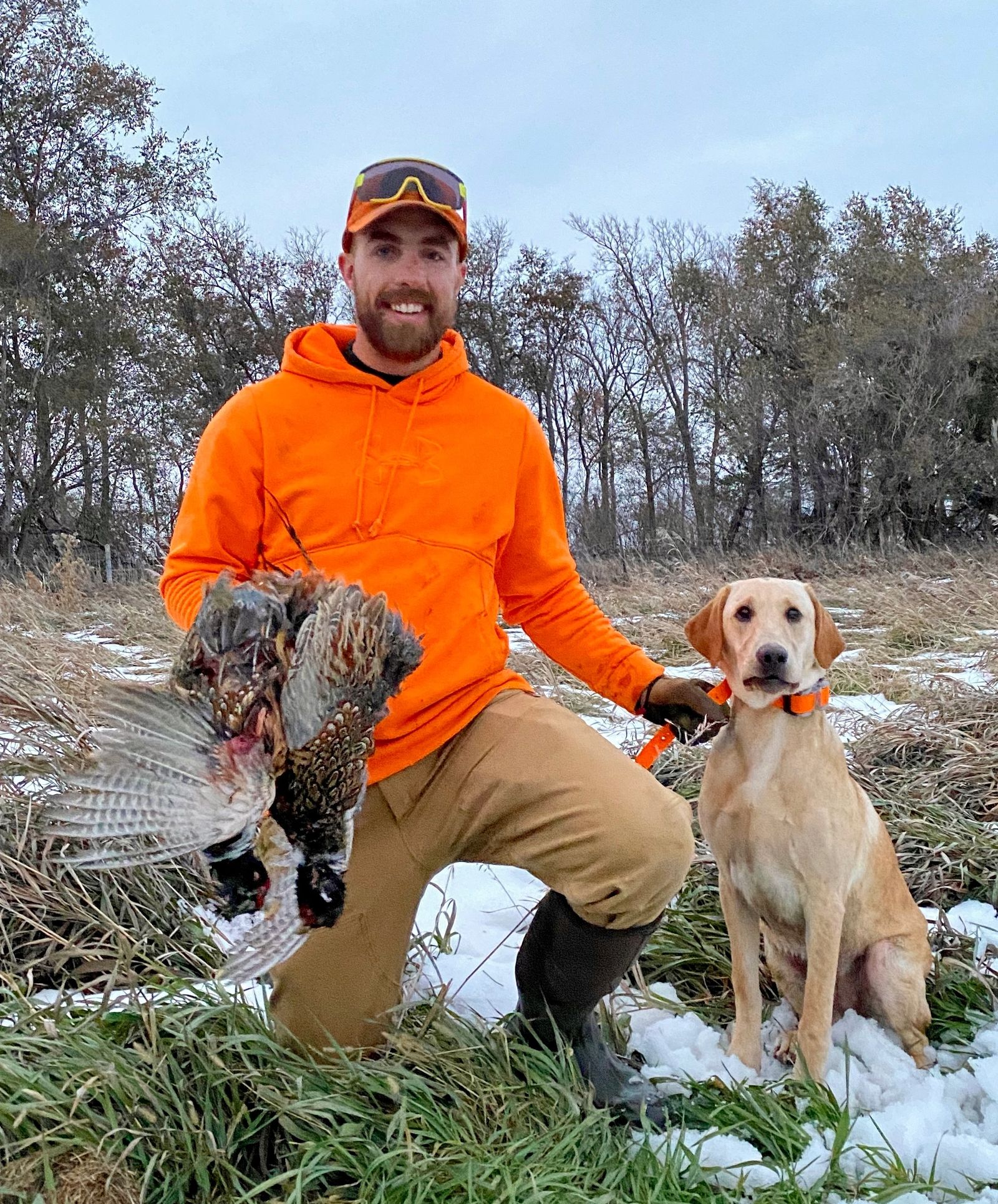
Wear an orange hat and an orange vest. The hat is what people see when you are down in the cover; the vest is what people see across a food plot. If you are the blocker at the end of a drive, wear the brightest thing you own and stand where the walkers can see you before the birds get up.
Do not rely on an orange strip on a backpack or a small patch. In heavy cover, that is invisible.
Guns and shells
Gauge. The 12-gauge is the default for good reason: it throws heavier payloads at longer ranges, and late-season roosters get up wild. The 20-gauge is a joy to carry all day and entirely capable inside forty yards, which covers most early-season shots. The 16-gauge is having a deserved comeback. The 28-gauge is for people who already know exactly what they are doing.
Choke. Improved cylinder for early season, modified as birds start flushing further out, improved modified or full for late-season pass shooting and long blockers. If your gun takes screw-in chokes, bring the wrench and a spare tube.
Shot size and load. A practical progression:
- Early season, close flushes: 1 to 1 1/8 oz of #6 lead, 1200-1300 fps.
- Mid season: 1 1/4 oz of #5.
- Late season, heavy birds and long shots: 1 3/8 oz of #4 or #5, or a high-quality bismuth/tungsten equivalent where nontoxic is required.
Bring two boxes per hunting day at minimum. Optimists bring one box a day and buy more at the gas station in Redfield. Ammunition availability in small towns is unpredictable; bring your own.
Cases. A hard case for travel and a soft slip for the field. If you are flying, check your airline's declared-firearm procedure and ammunition weight limits before you get to the counter.
Cleaning kit. A bore snake, a rag, and a small bottle of oil handle everything a three-day trip requires. Grass seeds and dust find their way into every action.
Eye and ear protection
Non-negotiable, and the thing most hunters skimp on.
Shooting glasses do double duty: they stop shot from a low bird and they stop the cattail stalk that whips back at your face when the guy ahead of you pushes through. Bring amber or light-rose lenses for overcast prairie days and a clear or yellow set for low light.
For hearing, electronic muffs or in-ear electronic plugs let you hear the dogs, the guide's call, and the flush while cutting the report. Passive foam plugs work but cost you situational awareness. Once you have hunted a week with electronic protection you will not go back.
Gloves, hats, and the small stuff that saves a day
- Gloves: two pairs. A thin shooting glove for handling the gun, and an insulated pair for the walk between fields and for blocking. Trigger-finger designs are worth it.
- Neck gaiter: the cheapest, most effective cold-weather item you will pack. Takes up no space, changes everything in wind.
- Stocking cap and a brimmed hat: sun in September, wind in January.
- Chapstick with SPF, sunscreen, and eye drops. Prairie wind is dry and relentless.
- Blister kit: moleskin, tape, and a small pair of scissors. Treat a hot spot at lunch, not at the end of the day.
- Ibuprofen and any personal medications, in a labeled bottle.
- A small headlamp. Late-season walks back to the truck happen in dusk more often than you expect.
Vest, bag, and what rides on your body
A good upland vest carries water, shells, a bird or two, and not much else. Look for a design with a bladder pocket, easy-access shell pockets you can reach without looking, and a game bag that drains.
Load it with:
- 25 shells in the pockets, more in the truck
- 2 liters of water minimum, more in September
- A granola bar or two
- A folding knife
- Your license, tucked in a zippered pocket
- A phone in an inside pocket for photos and for the group text
Leave the binoculars, the folding saw, and the four-pound field guide in the truck.
If you bring your dog
Bringing your own dog changes the packing list substantially, and this is where people underestimate.
- Water and a collapsible bowl. A working dog needs more water than you do, and prairie sloughs are not always safe drinking.
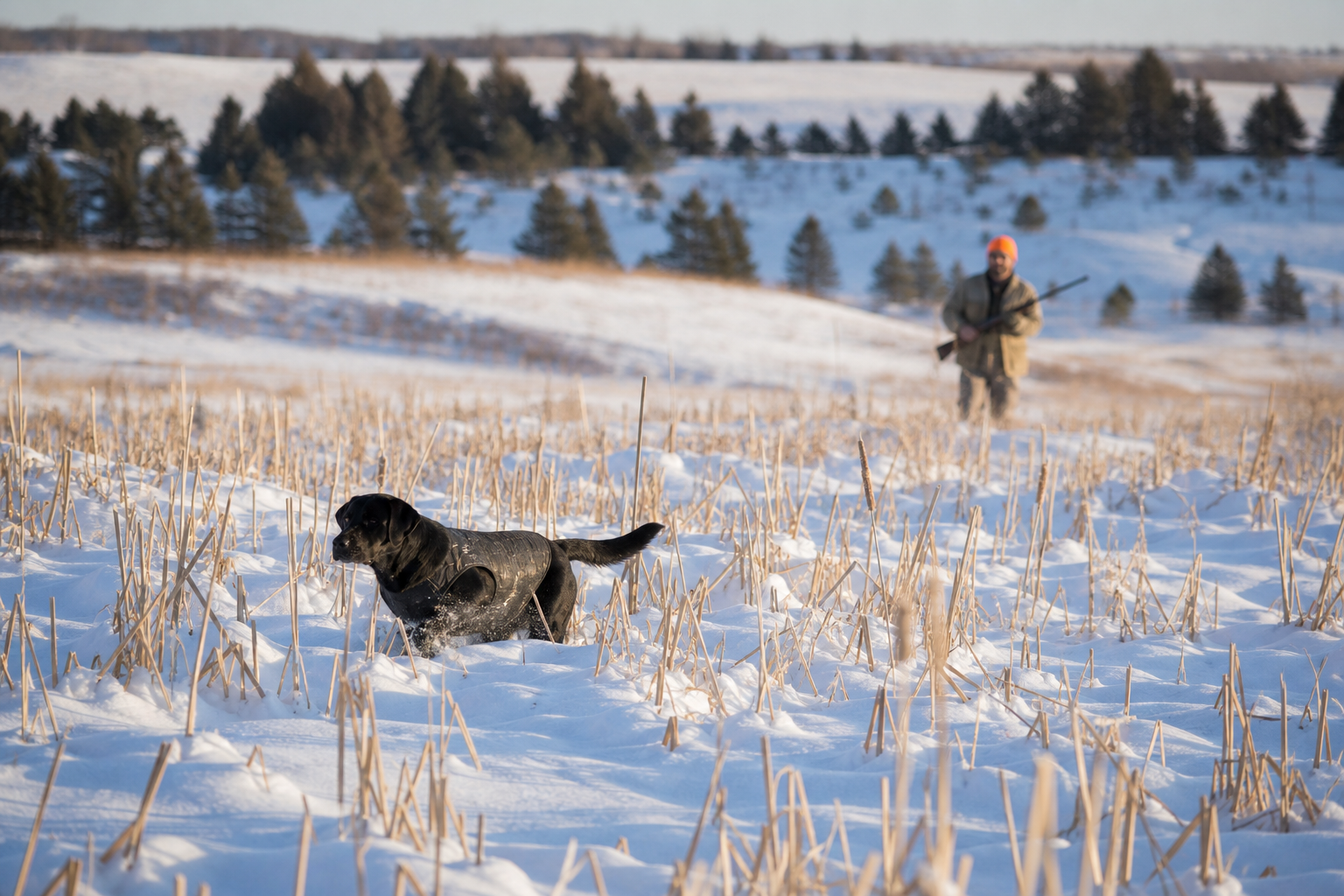
- A dog vest for cattails and cold water, and a skid plate or chest protector for corn stubble.
- Booties, at least two sets, for frozen ground and stubble fields.
- A first-aid kit built for dogs: vet wrap, saline flush, tweezers or forceps for cactus and thorns, a stapler or wound closure strips, and antiseptic.
- Vaccination records, including kennel cough. Bring paper and a photo.
- A crate for the truck and the kennel, plus bedding.
- Their normal food, plus about twenty percent more than usual. A hard-working dog burns calories fast.
- A towel and a dry blanket. A wet dog in a cold truck is a sick dog by day three.
Check paws, ears, and armpits every single field. Cactus, awns, and cuts are easy to catch early and miserable to catch late.
Camera, and how to actually get good photos
You will want pictures. A phone in a chest pocket beats a camera in a bag every time. Two tips that improve hunting photos more than any gear: shoot into the low sun during the first and last hour, and get the camera down at bird level rather than shooting down at a pile of roosters from six feet. Ask before photographing other people's dogs and other people's birds.
What to leave at home
- Cotton anything, including jeans and hooded sweatshirts.
- Full rain suits, unless the forecast is genuinely wet.
- New boots.
- Heavy backpacks. Your vest is the pack.
- More than two guns per hunter. It complicates travel and you will shoot the same one all week.
- Camo. Pheasants do not care, and your hunting partners want to see you.
The lodge side of the list
At Coteau View, meals, beds, towels, and bird processing are handled, which trims the list considerably. Still bring:
- Comfortable clothes for the evening and something to sleep in
- Shower shoes if you like them
- A cooler or an insulated bag for the drive home with your birds
- Cash for gratuities for guides and lodge staff
- A charger and a portable battery
- Any beverage preferences beyond what the lodge stocks
Ask ahead about laundry. Being able to wash a base layer mid-trip cuts what you pack roughly in half.
Season-specific adjustments
September and early October: lighter boots, one less layer, twice the water, sunscreen, and a plan for shade for the dogs. Insect repellent is not a bad idea early.
Late October and November: the full layering system, both glove sets, and a wind layer that actually blocks wind.
December and January: insulated boots, hand warmers, a face covering, and an extra pair of everything that touches skin. Keep a dry set of clothes in the truck.
February and March: the widest swing of the year. Pack for both fifty degrees and five degrees, because you may get both in the same three days.
A final, unglamorous piece of advice
Walk before you come. Not on a treadmill — outside, in the boots you plan to wear, with the vest loaded. Three miles a day for four weeks before the trip will do more for your enjoyment than any piece of equipment on this list. South Dakota pheasant hunting is a walking sport disguised as a shooting sport, and the hunters who have the best week are the ones who are still fresh on the afternoon of day three.
Questions about what to bring for your specific dates? Call the lodge at 605.395.7788 or email info@coteauviewhunts.com — we will tell you honestly what the fields are doing that week.
Ready to hunt this country?
Our licensed preserve season runs September 1 through March 31. Check open dates or call the lodge at 605.395.7788.