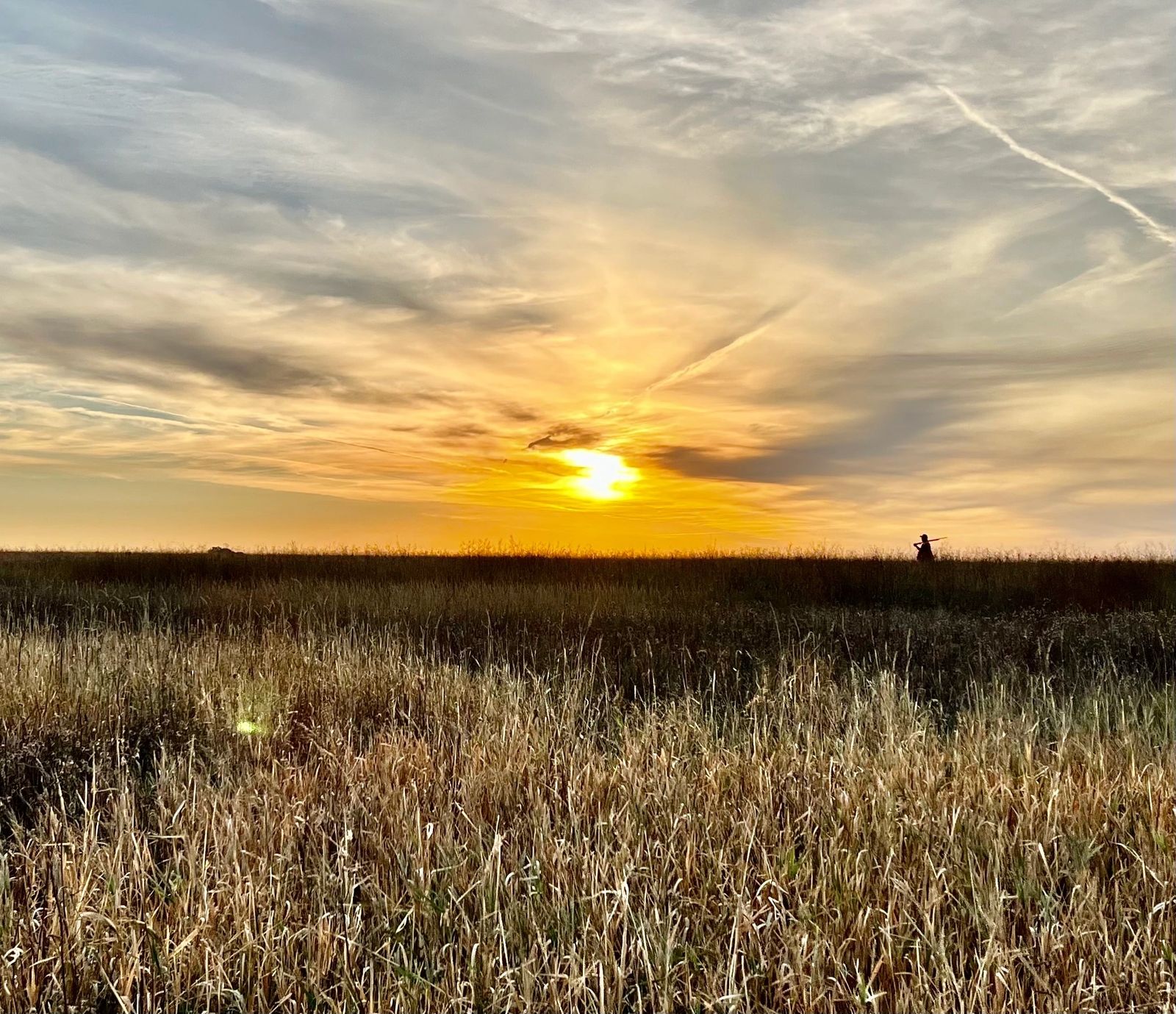
South Dakota Pheasant Hunting Season: Dates, Limits, and How to Plan Your Trip
Every fall, roughly a hundred thousand hunters point their trucks toward South Dakota. Most of them are chasing the same thing: a rooster pheasant climbing out of heavy cover with the sun behind it, cackling like it owns the place. If you are planning your first trip — or your fifteenth — the difference between a good week and a great one usually comes down to planning that happens months before you ever load a shell.
This guide walks through how the South Dakota pheasant season actually works, what the dates and limits mean in practice, how hunting private managed ground differs from public land, and how we help guests at Coteau View Hunts near Conde build a trip that fits their group, their budget, and their calendar.
The two seasons every visiting hunter should understand
South Dakota effectively runs two overlapping opportunities, and confusing them is the single most common planning mistake we see.
The traditional wild-bird season is the one that makes headlines. It opens the third Saturday of October and runs into early January. Shooting hours begin at 10:00 a.m. Central for the first portion of the season, then shift earlier. The daily limit is three roosters, with a possession limit of fifteen. This is the season that draws the big crowds, the opening-weekend parades through small-town main streets, and the pheasant-feed suppers at the local fire hall.
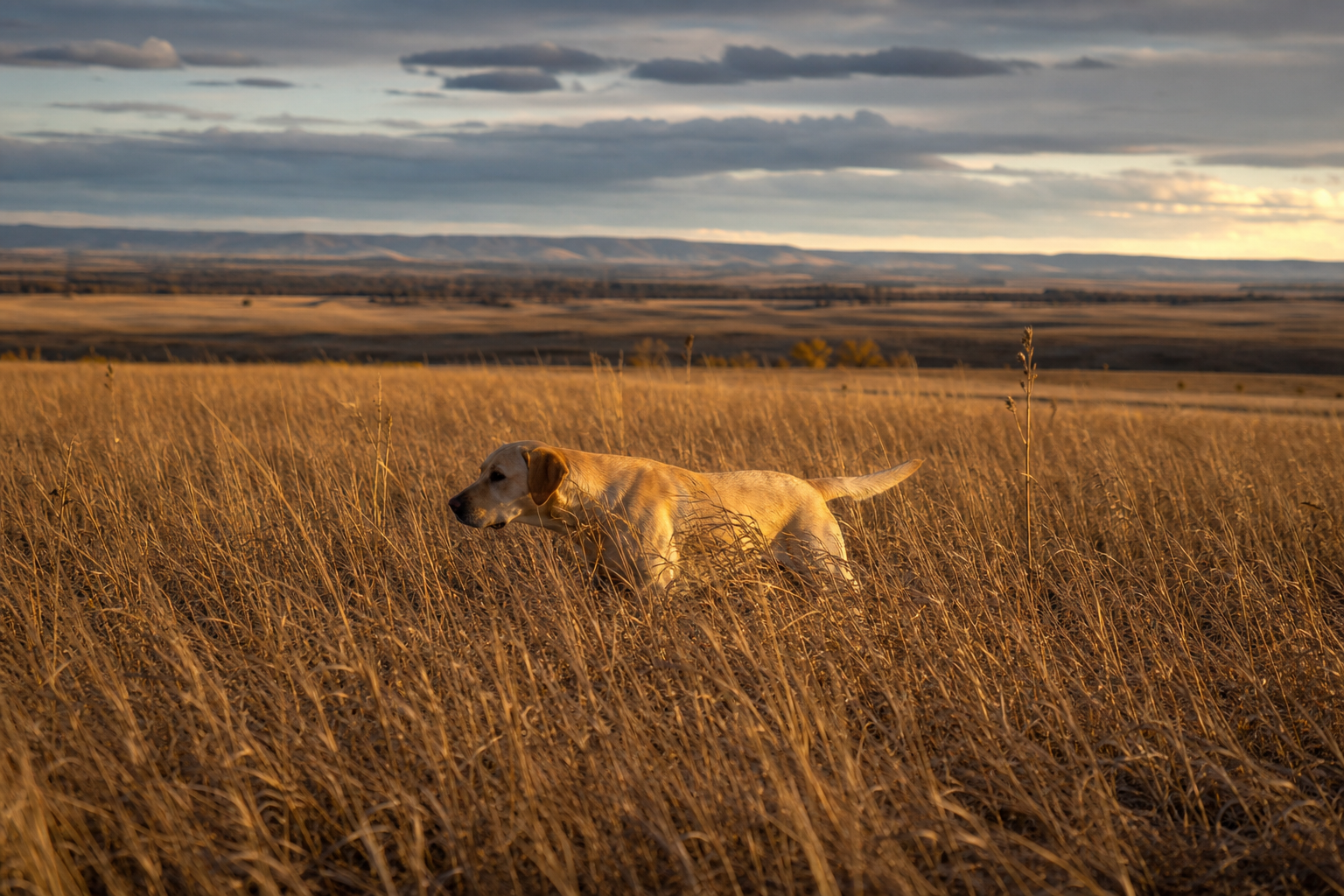
The season on private ground works the same way, but the experience is different. Coteau View Hunts hunts wild birds only — we never stock or release birds. Every rooster you flush with us is a wild South Dakota bird raised on the habitat we manage year-round: food plots, shelterbelts, CRP grass, and cattail sloughs that hold birds when the weather turns.
Because we hunt wild birds on private ground we manage ourselves, the birds are smarter and the dog work is honest. You walk the same country our family has hunted for three decades, work finished Labs, and eat the same meals in the same lodge — usually with your group and nobody else's.
What each part of the season actually feels like
Dates on a calendar do not tell you much about what you will experience. Here is how the seven-month window breaks down from the guide's seat.
Early season (September into mid-October). The corn is still standing in a lot of fields and the grass is tall and green. Birds hold tight, which is a gift for young dogs and new shooters — the flushes happen close, often inside twenty yards. Temperatures can climb into the seventies or higher, so dog work is measured in shorter runs with more water breaks. This is the best window for families, for first-time hunters, and for anyone who wants comfortable weather and short walks.
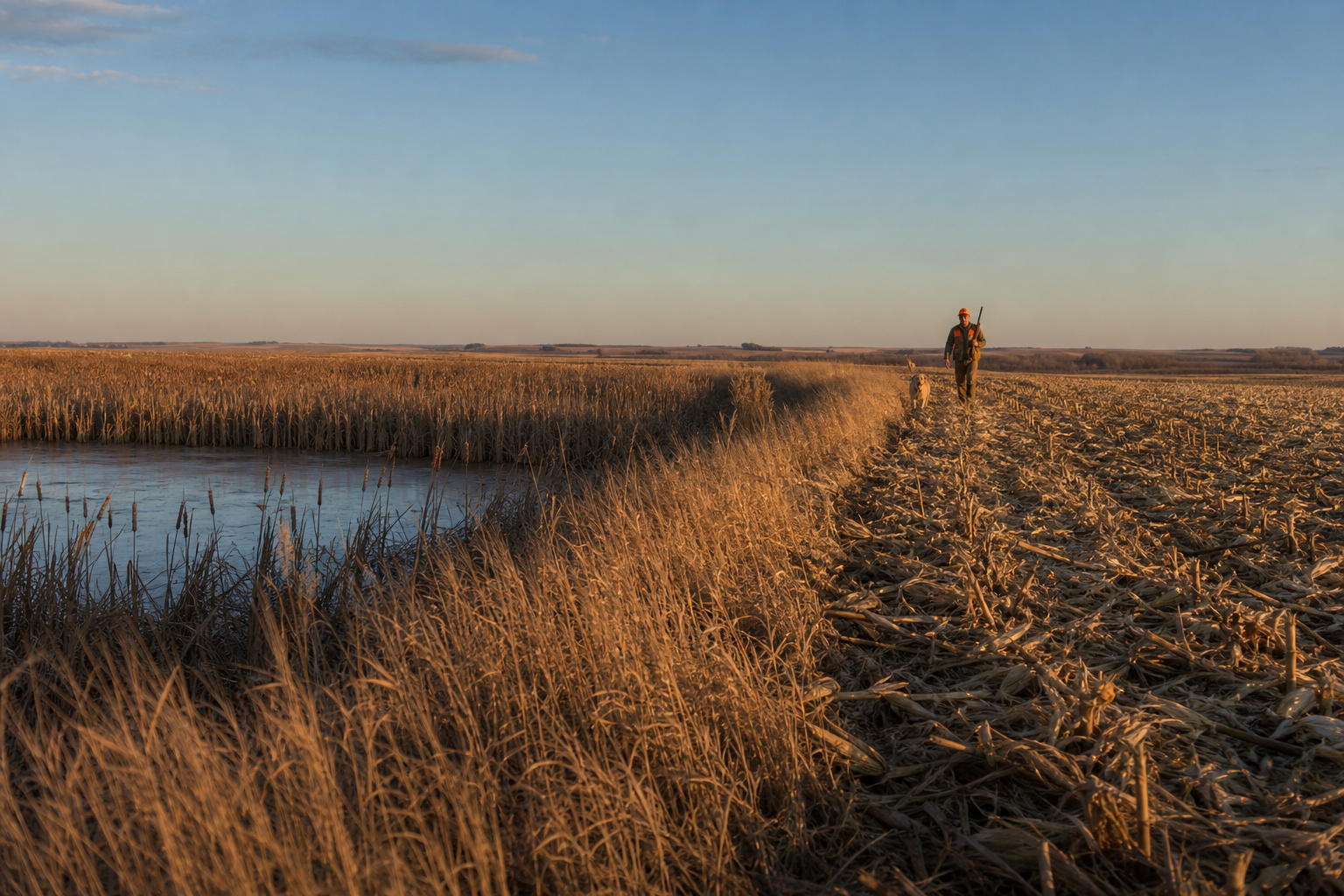
Peak season (late October through November). Harvest is underway or finished, cover is concentrating, and the birds are fully feathered and fast. This is postcard South Dakota: shelterbelts glowing gold, frost on the truck at daylight, and roosters coming out of a cattail slough three at a time. It is also the busiest stretch of the year. Groups that want a peak-season week typically book eight to twelve months out.
Late season (December through January). The birds are educated and the weather does the work for you. Cold pushes pheasants into thick, predictable cover — cattails, plum thickets, heavy shelterbelts. Walks are longer, flushes are wilder, and shots are further. Experienced hunters often say late season produces the most memorable birds of the year. Dress for it and it is spectacular.
Late season (December and January). Fewer hunters, open calendars, and a real chance to have the lodge to your group alone. Weather is unpredictable — you might get a fifty-degree bluebird day or a ground blizzard — but the birds are bunched in heavy cover and the hunting is as honest as it gets. This is a favorite window for corporate groups and hunters who want wild birds without opening-weekend crowds.
Licenses, fees, and what you actually need to buy
Getting the paperwork right is easy once you know which season you are hunting.
- All hunters with us need a South Dakota small game license. Nonresidents can buy it online through the Game, Fish and Parks portal; we walk you through it before you travel.
- Wild-bird hunters need the nonresident small game license, which is sold as a limited-day license that can be used across separate periods within the season.
- Everyone born after January 1, 1980 must show proof of hunter safety education. Bring a photo of your card in your phone as a backup.
- Federal migratory bird stamps apply only if you are adding waterfowl to your trip. If you plan to shoot ducks or geese in the same week, sort this before you travel.
Print or screenshot everything. Cell service in the Conde area is decent but not universal, and it is far easier to have your license saved offline than to stand in a field trying to load a state website.
Building the trip: how many days, how many people
The most common question we get is some version of "how long should we come for?" Our honest answer, after thousands of guest days, is three days of hunting for a first trip.
One day is a taste. Two days is a good weekend but leaves you wishing for one more morning. Three days lets you hunt different country each day, gives your group time to find its rhythm with the dogs and the guides, and builds in a weather buffer. If day two is a washout, you still have day three.
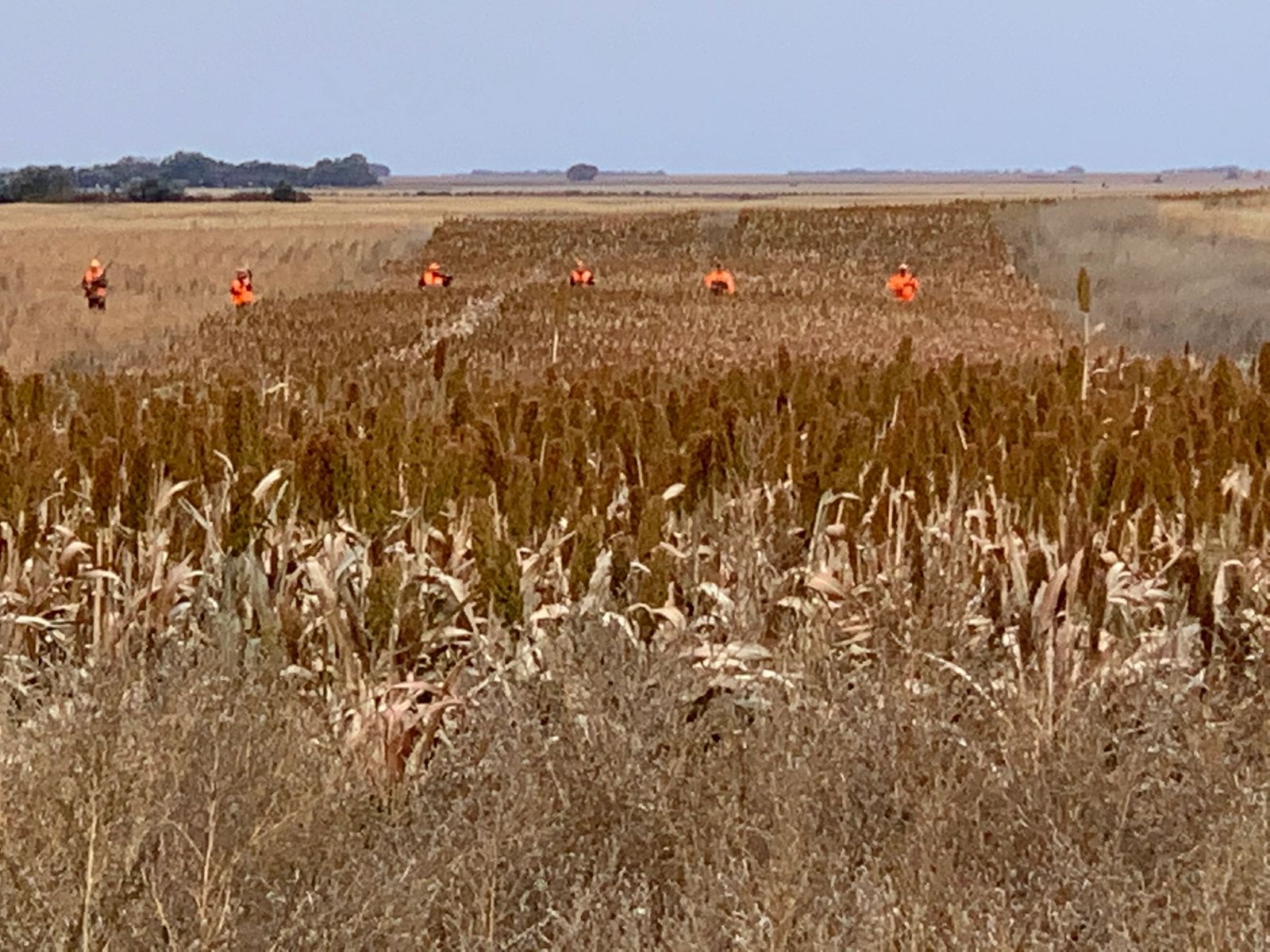
Group size shapes the experience more than anything else. A party of six to ten hunters works ideally on most drives: enough guns to cover the walkers and the blockers, few enough people that everyone gets shooting. Groups of four still hunt very well, they just walk smaller fields. Groups of sixteen or more can absolutely be accommodated, but they usually split into two parties working separate fields and rotating.
A practical planning sequence that works:
- Pick your window first — early, peak, late, or extended — based on weather tolerance and calendar flexibility.
- Lock the lodging dates before you finalize the guest list. Beds are the constraint, not fields.
- Confirm who is bringing dogs, and tell your outfitter. It changes how the day is run.
- Book flights into Aberdeen or Sioux Falls once dates are firm.
- Send the group a packing list eight weeks out so nobody buys boots the night before.
Getting here
Coteau View Hunts sits outside Conde, in Spink County, in the heart of the Glacial Lakes and Prairies region. The practical travel options:
- Aberdeen Regional Airport (ABR) is the closest commercial airport, roughly forty-five minutes away, with connections through Minneapolis and Denver.
- Sioux Falls Regional (FSD) is about two and a half hours south and typically has cheaper fares and more flight options.
- Driving is genuinely reasonable from Minneapolis (about five hours), Omaha (about six), or Chicago (about eleven).
Most groups that fly rent a full-size SUV or a van in Sioux Falls, split the cost, and use the drive as part of the trip. If you are shipping firearms or flying with cases, verify your airline's policy in advance — the rules for ammunition weight in checked baggage catch people every year.
What a hunting day looks like
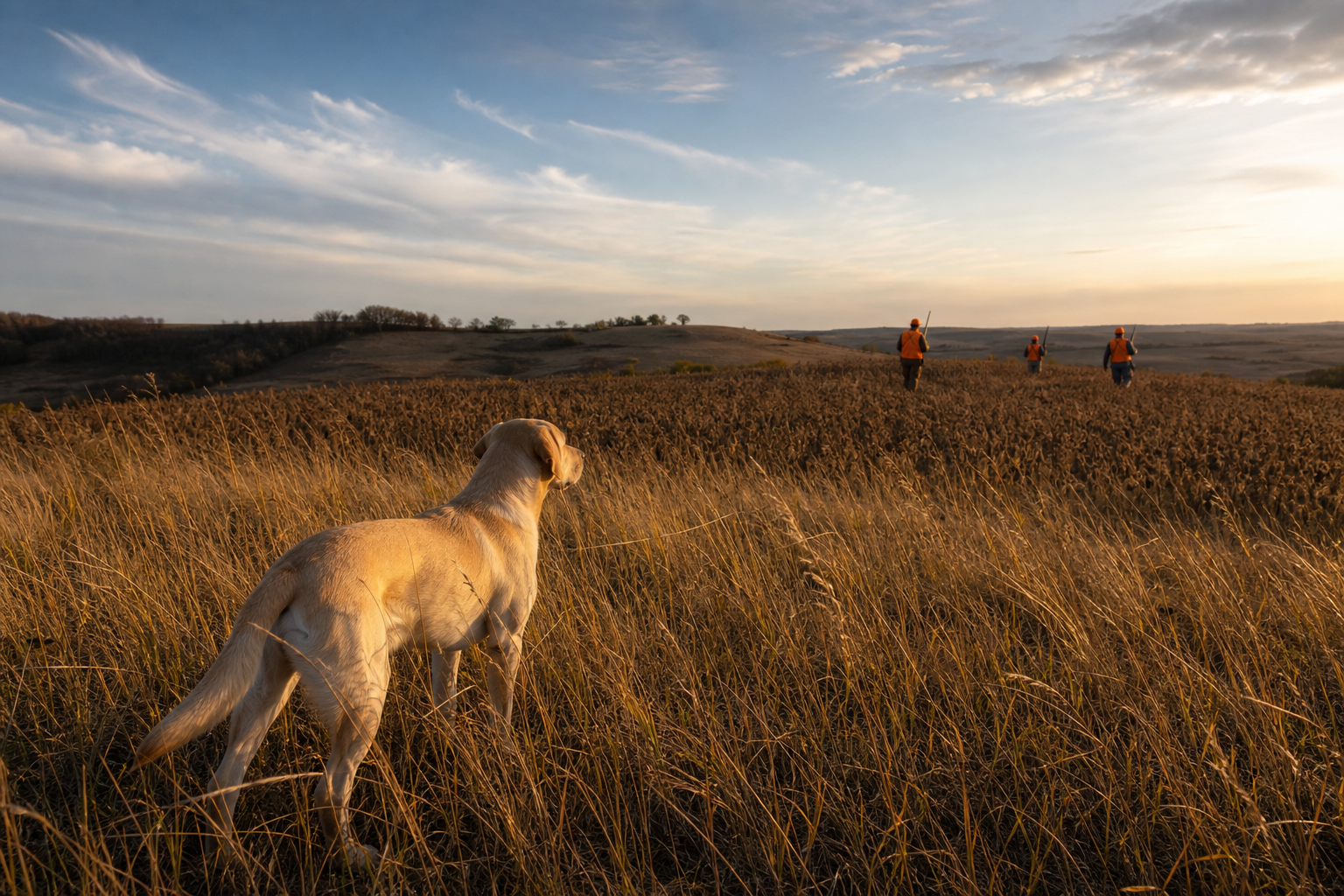
A typical day at the lodge runs on a simple rhythm. Breakfast is early and substantial. You are in the field within a half hour of leaving the table. Morning drives run two to three fields with the dogs doing the hard work through grass, cattails, and food plots. Everyone rotates between walking and blocking so that no one spends the whole day at the end of the line.
Lunch is back at the lodge — a hot meal, not a sandwich in the truck. Guests nap, clean guns, sit by the fire, or wander down to the pond. The afternoon hunt starts mid-afternoon and runs until the light goes. Birds get cleaned and packaged for you. Dinner is served family style, and the evening ends the way it should: in the great room, telling a slightly improved version of what happened at the last shelterbelt.
That structure holds across all seven months. What changes is the cover you walk, the clothes you wear, and how far the roosters get out ahead of the dogs.
Regulations that trip people up
A few rules catch visiting hunters most often:
- Blaze orange. At least one visible article is required. A hat alone satisfies the letter of the law, but a vest is smarter, especially in tall cover with a line of walkers.
- Plugged shotguns. Three-shell capacity total in the gun. Check your magazine plug before you travel, not in the field.
- Road hunting rules. Shooting from a vehicle or a roadway is illegal. If you are hunting with a guide you will never be near this situation, but hunters who mix in public-land days should know it cold.
- Transport and tagging. Birds being transported need identifiable plumage attached. If you are shipping or driving birds home, keep a wing or the head attached until they reach their destination.
- Roosters only. South Dakota pheasant hunting is rooster-only. Know the difference on the flush so nobody hesitates on a legal bird or fires on an illegal one.
Booking timelines that actually work
Here is the practical calendar we recommend to guests, working backward from your hunt:
- Twelve to eighteen months out: peak-season October and November weekends for large groups.
- Six to nine months out: peak-season weekdays and December dates.
- Three months out: September and early-season dates, and most late-season weekends.
- Four to eight weeks out: February and March. There is often real availability here, and it is the best value on the calendar.
If your dates are flexible, tell your outfitter that up front. We can frequently place a flexible group into a canceled peak week that a rigid group could never get.
Costs and what is included
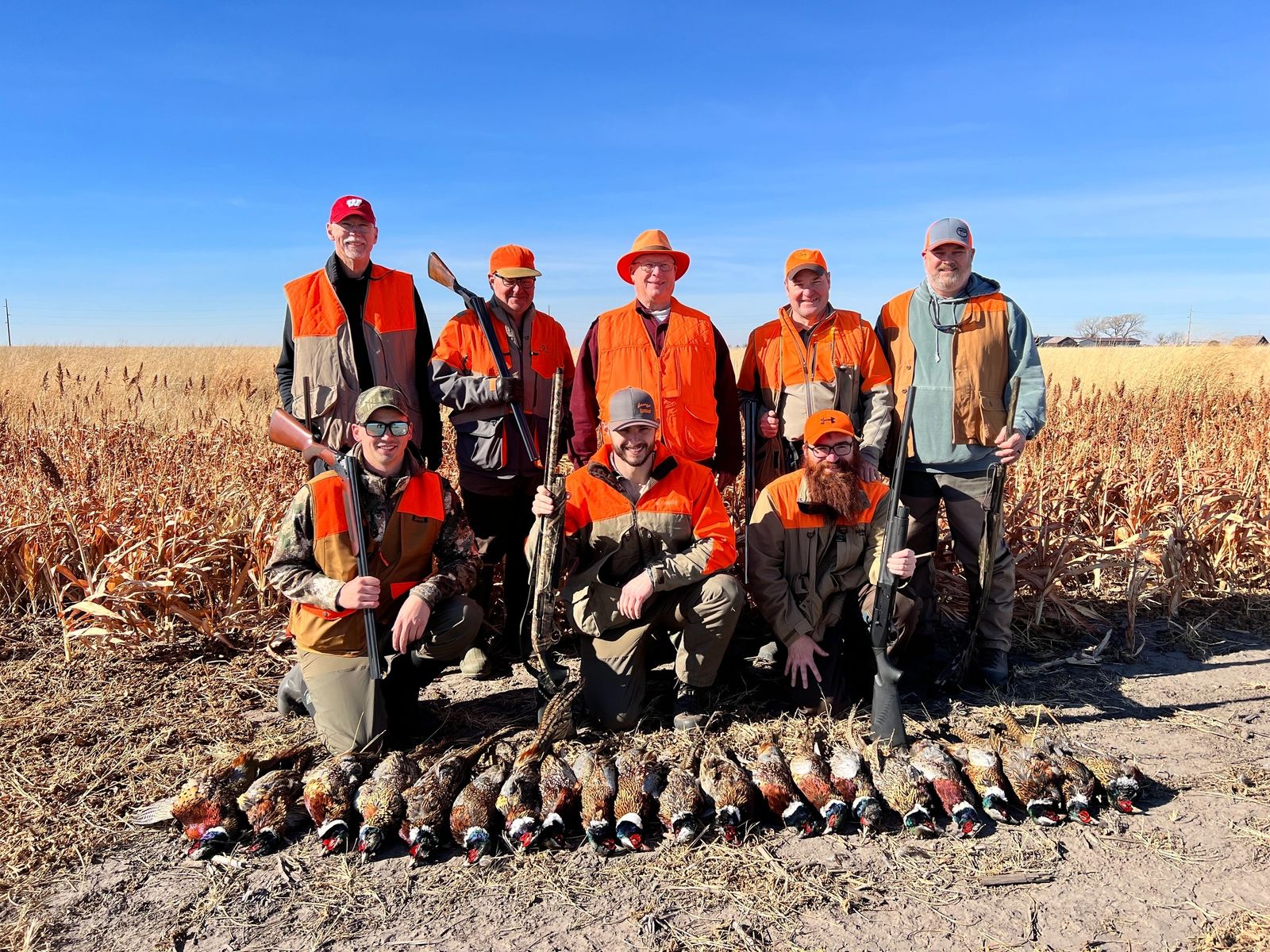
Trip budgets vary by outfitter, but the honest way to compare is to look at what is bundled rather than the headline day rate. At Coteau View, a hunt package includes guided field time, dog work, lodging, all meals, bird cleaning and packaging, and field transportation. What is not included is your license, your shells, gratuities for guides and staff, and travel to and from the lodge.
When you are comparing operations, ask these five questions:
- Are meals and lodging included, or priced separately?
- How many hunters per guide and per dog?
- Is bird cleaning included, and are birds packaged for travel?
- What happens if weather cancels a hunting day?
- Is there a bird count guarantee, and how is it calculated?
Those answers explain almost every price difference you will find between South Dakota outfitters.
Bringing your own dog
Plenty of guests bring a dog, and we welcome it. A few things make it go smoothly. Make sure your dog is honest on recall in heavy cover, because prairie grass swallows a dog fast. Bring more water than you think and check paws every field — cornstalk stubble and frozen ground both take a toll. Verify vaccinations, especially kennel cough, and bring a copy of records. And be realistic about conditioning: a dog that walks the neighborhood three times a week will not last three full days in South Dakota cover without a plan for rest days.
If your dog is young and green, come in September. Tight-holding early-season birds build confidence in a way that late-season wild flushes never will.
The case for going more than once
Something that surprises first-timers: the country changes so completely between September and March that a return trip in a different window feels like a different state. The same shelterbelt that gave up two roosters over a green food plot in early October is a snow-drifted funnel in January holding thirty birds. Guides who have hunted this ground for decades still learn something every season.
That is why our rebooking rate is what it is. Groups come once for the birds and come back for the country.
Ready to pick your dates?
Check the live availability calendar to see which dates are open across our full booking calendar, then send a booking request with your group size and preferred window. If your dates are soft, say so — flexibility is the single best tool you have for landing a great week.
Call the lodge at 605.395.7788 or email info@coteauviewhunts.com and we will walk you through it.
Ready to hunt this country?
We guide wild-bird pheasant hunts on private South Dakota ground. Check open dates or call the lodge at 605.395.7788.